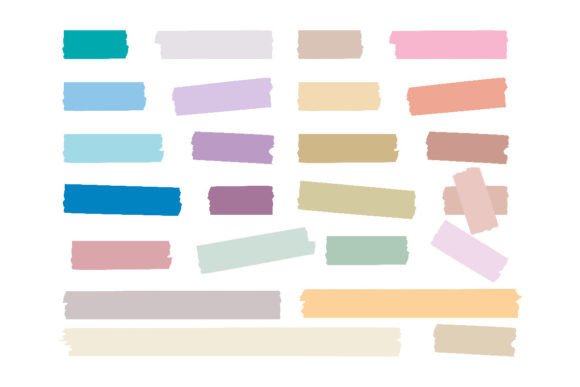
Sticky Strips: A Creative Guide to Colored Decorative Tape
There’s a certain energy that comes from tearing a piece of tape. It’s immediate, a little messy, and undeniably human. This is the feeling captured in the Sticky Strips. Colored Decorative Tape vector set. This collection of design assets brings the tactile, playful world of washi tape and scrapbook stickers into your digital projects. It’s a set of illustrations that feel personal, adding a layer of authentic charm that polished, perfect graphics often miss. For designers, marketers, and creators looking to inject personality into their work, this asset provides a versatile and engaging visual language.
The set includes a variety of colored tape strips and sticker illustrations, each with a unique texture and hand-torn appearance. You’ll find solid colors, subtle patterns, and pieces that look like they’ve been ripped from a roll with care. The aesthetic is rooted in modern typography and graphic design trends that favor a handmade, crafted feel. It’s not a font, but a collection of pre-made decorative elements. Think of it as a toolkit for adding visual emphasis, creating borders, or framing content in a way that feels approachable and creative. The included EPS files ensure these assets are scalable, making them a practical choice for both digital and print applications.
Where This Decorative Set Shines
The true strength of Sticky Strips. Colored Decorative Tape lies in its versatility. It’s a premium design asset that can elevate a wide range of projects, moving beyond simple decoration to become a functional part of your visual strategy.
For Branding and Marketing
Entrepreneurs and small business owners can use these elements to craft a brand identity that feels relatable and genuine. Imagine a series of social media graphics where product photos are "taped" to a background, or an email newsletter where a sticky strip highlights a special offer. For packaging design, these illustrations can create a custom, boutique look on labels, boxes, and thank-you cards. In logo design, a single, stylized strip can become a memorable mark that communicates creativity and attention to detail. It’s an excellent way to build brand recognition without relying on overly complex graphics.
For Digital and Editorial Projects
Bloggers, publishers, and content creators will find this set invaluable for web design and editorial design. Use a torn tape strip to bookmark a section, create a dynamic sidebar, or add a playful frame to a pull quote. It breaks up text-heavy layouts and guides the reader’s eye in an intuitive, visual way. For e-commerce sites, these elements can make product pages feel more curated, as if items are being presented in a personal lookbook. The assets work beautifully as overlays on images, adding texture and depth to flat digital compositions.
For Personal and Craft-Based Work
Crafters and hobbyists can seamlessly blend digital and physical worlds. The EPS format allows for easy printing and cutting for scrapbooking, journaling, and handmade card projects. The vector quality means the illustrations will remain crisp whether you’re printing a small sticker or a large poster. This makes the set a fantastic resource for creating custom planner stickers, party invitations, or digital collages. The playful personality of the tape strips encourages experimentation and adds a joyful, tactile element to any personal project.
Working with the Sticky Strips Asset
Integrating a new set of design assets into your workflow requires a thoughtful approach. To get the most out of Sticky Strips. Colored Decorative Tape, consider these practical guidelines.
Evaluating Project Fit: This asset set has a distinct personality. It’s best suited for projects aiming for a friendly, creative, artisanal, or youthful tone. It may not be the right fit for ultra-corporate, formal, or minimalist brands where every element must convey sleek precision. Assess whether the handmade, slightly imperfect style aligns with your project’s goals and audience expectations.
Testing and Pairing: The effectiveness of these strips often depends on what they accompany. Test them against your primary typeface. They tend to pair well with clean sans serif fonts for a modern contrast, or with script fonts and handwritten fonts to reinforce a crafted aesthetic. Avoid pairing them with highly ornate or busy serif fonts, as the visual noise can become overwhelming. Use the strips to create a visual hierarchy—a bright, solid strip can highlight a key message, while a more subtle patterned one can serve as a decorative border.
Readability and Balance: The primary purpose of these elements is decoration and emphasis, not body text. Use them strategically to frame content, not obscure it. Ensure that any text placed over or near a strip remains highly legible. Sometimes, a strip works best as a standalone graphic element rather than a background for text. The goal is to enhance your message, not compete with it.
Licensing and Practicalities: Always review the commercial licensing terms included with your download. Understanding the permitted uses—whether for client work, physical products, or digital sales—is crucial for professional application. The provided EPS and other vector files are your most valuable assets, as they allow for infinite customization of size and color within vector editing software. This flexibility ensures the set can adapt to countless color palettes and layout requirements, making it a long-term tool in your creative arsenal.
Ultimately, Sticky Strips. Colored Decorative Tape is more than just a set of clip art. It’s a bridge between the warmth of handmade crafts and the precision of digital design. By understanding its strengths and applying it with intention, you can create work that feels both professionally polished and authentically engaging.